

Share this content:
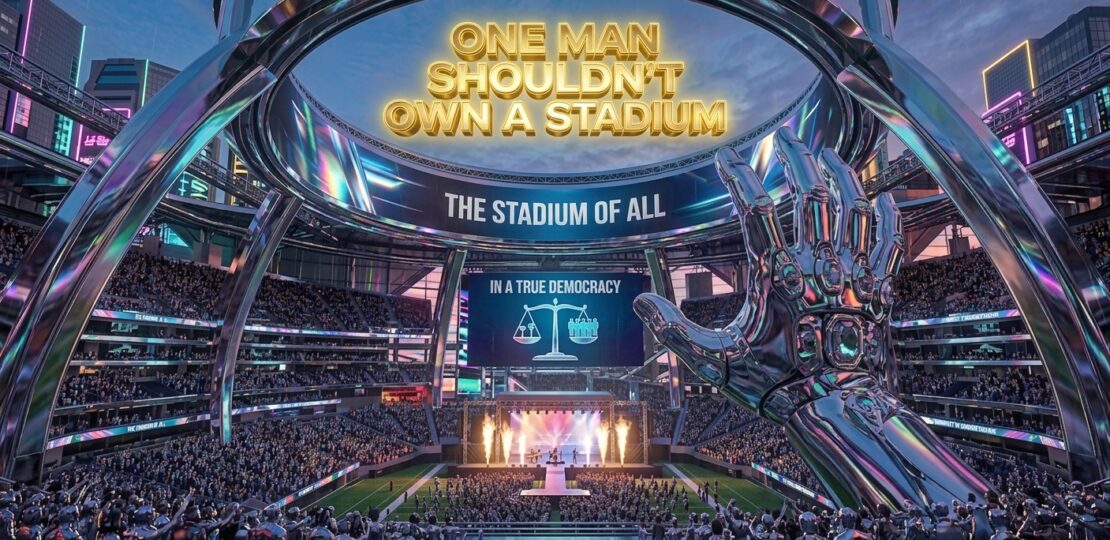
In a true democracy, stadiums that draw their value from the public should serve the public.
The recent controversy over Macklemore’s removal from Ed Sheeran’s U.S. tour is more than a celebrity dispute. Macklemore said he was dropped after New England Patriots owner Robert Kraft objected to his appearance at Gillette Stadium; Sheeran later said venues and promoters made the final decision after he tried to find a resolution. The argument matters because Gillette Stadium is not only a concert venue or football field. It is a civic stage where private ownership, public culture, political speech, fan loyalty, labor, race, and wealth all collide.
The Democratic Problem
We the people should demand a restructuring of this theft of the people’s commonwealth. A stadium is built out of public passion, public infrastructure, public attention, and often public money. Even when a facility is privately financed, it still depends on roads, police, transit, zoning, municipal services, fans, workers, and the civic identity of the region. No single billionaire should be able to treat such a space as a private throne when the culture and economy around it are made by everybody.
The Green Bay Packers offer an important counterexample. Since 1923, the team has been publicly owned, with millions of shares held by hundreds of thousands of stockholders and no dividends paid to shareholders. That model is imperfect, but it proves that a major sports franchise does not have to be controlled by one wealthy individual. It also shows that community ownership can protect a team’s identity, keep it rooted in place, and prevent one owner from turning a public symbol into a personal asset.
A good idea would be a lottery for everyday people to get the opportunity to own shares with dividends or public benefit returns. The point is not merely symbolic ownership. The point is a structure where ordinary residents, workers, and fans can share in the wealth created by franchises that depend on public loyalty and civic resources. To be honest most average everyday Americans, more than 50 percent now live paycheck to paycheck and can’t afford to go to an NFL Home game. A democracy should not accept a system where the public carries the burden while private owners capture all the upside.
Why the Green Bay Packers Model Matters
I researched the reason that prevents the Green Bay Packers from raising money the same way privately owned teams can is that Packers ownership is not built to reward investors. A privately owned NFL team can raise capital through a billionaire owner, debt guarantees, minority stake sales, or private equity. Those investors expect appreciation, resale value, and access to profit. Packer’s stock does not work that way.
The Packers are a publicly owned nonprofit corporation, not a normal for-profit company. Their shares do not pay dividends, do not trade like ordinary stock, and do not allow shareholders to profit from the team’s economic performance. In other words, the Packers’ stock functions more like a certificate of community belonging than a tool for private wealth-building.
That limitation is exactly why the model matters. It separates team identity from investor greed. It says that sports can belong to a place and its people rather than to one fortune. It also suggests a direction for reform: communities could create hybrid systems that protect public ownership while still raising money for stadium upgrades, local development, and community programs.
A Community-Capital Alternative
We The People should demand that the NFL modernize the model. The safer and fairer path would be a hybrid community-capital structure: keep the football team community-owned, but create separate funding vehicles around stadium projects, real estate, local business development, and community investment.
The core idea is to keep the team community-owned while creating separate ways to fund stadium projects, neighborhood development, and public benefit. Community bonds, project-specific investment funds, and local development trusts could help finance improvements without selling control to billionaires or private equity firms. Investors could receive capped returns, while excess gains would flow into public programs, worker benefits, youth sports, housing, small businesses, and local infrastructure.
The Packers example shows the difference between community control and investor control. Private equity wants upside; communities need accountability. The right reform would separate team control from project financing so that no wealthy person or investment group can dominate the franchise, silence dissent, or extract unlimited wealth from a platform built by public culture.
The Public Deserves a Return
Across the country, stadium subsidies remain controversial because taxpayers often pay for construction, infrastructure, tax breaks, bonds, maintenance, policing, roads, utilities, and surrounding development while team owners watch franchise values rise. Economists have repeatedly questioned whether these deals produce enough public benefit to justify the cost. If the public is asked to invest like a partner, then the public should be treated like a partner.
That return could take many forms: direct revenue-sharing with city governments, worker wage guarantees, community trust funds, youth sports investment, affordable housing near stadium districts, small-business grants, transit improvements, and discounted access for local residents. Public money should not become a private pipeline into billionaire wealth. It should circulate back into the neighborhoods, workers, and fans who make the stadium valuable in the first place.
Labor, Race, and Risk
Football wealth is created by workers and players. Stadium employees sell food, clean seats, direct traffic, manage crowds, secure events, maintain facilities, and help produce the spectacle that owners monetize. Many of those jobs do not pay wages that reflect the value of the venue. Meanwhile, players risk their bodies, long-term health, and future livelihoods every week. The entertainment product is built on their labor and danger.
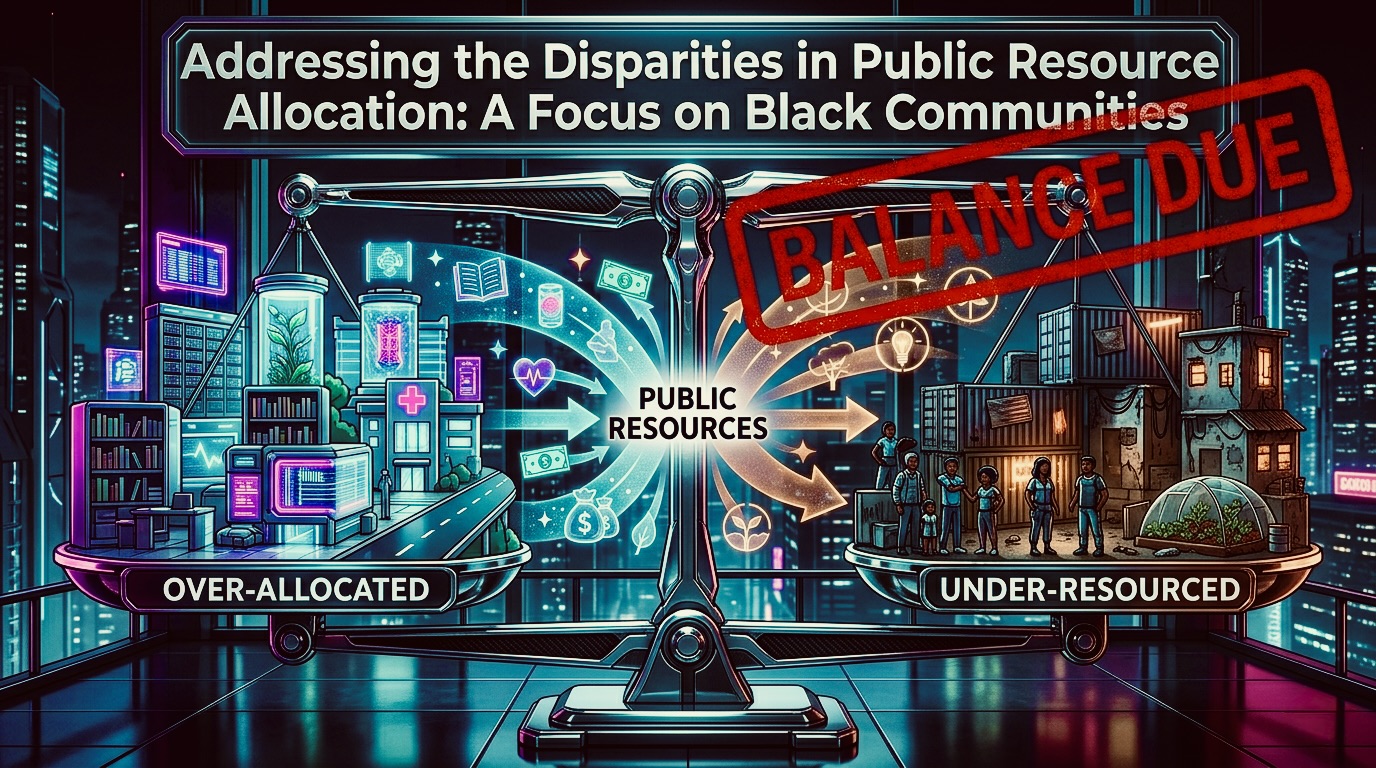
The racial dimension cannot be ignored. Available demographic reporting shows that NFL players are disproportionately people of color, with Black players making up a majority of rosters and some estimates placing players of color well above half of the league. Yet ownership, executive power, and the largest financial gains remain concentrated among a small class of wealthy white owners. That imbalance is not just an economic issue. It is a democratic issue.
The wealth generated around stadiums should help fund city municipalities, streets, roads, bridges, programs for the poor, disabled residents, and people experiencing homelessness. It should also support the workers who make game day possible and the players whose bodies are the foundation of the sport. A society that lets billionaires hoard public value while essential workers struggle is not practicing democracy. It is practicing extraction.
Conclusion: A Stadium Belongs to the People
One man should not own a stadium in the moral sense, even if he owns it on paper. A stadium is a public gathering place, a cultural common, an economic engine, and a civic symbol. It depends on fans, workers, players, taxpayers, streets, police, transit, public attention, and shared identity. When one billionaire can decide who speaks, who performs, who profits, and who is excluded, the community loses power over a space it helped create.
We The People should demand part of the cut—the profits—since taxpayers pay for stadiums, since minorities make up a large share of the players on the field, and since the good old boys’ network of immoral billionaires keeps hoarding money and resources, increasing their wealth while stadium employees make low wages and football players risk their well-being and future livelihoods. ~ Balance Due Now
RELATED POSTS
View all