

A Spiritual Warning for the AI Age
June 18, 2026 | by rodney
Share this content:
AI is everywhere now even in the spaces where love, loneliness, prayer, and purpose used to live untouched. But when artificial intelligence starts sounding like intimacy, are we building wisdom or another Tower of Babel? The Minister of Balance weighs in on AI relationships, spiritual discernment, and why God’s power will always outlast the machines we build.
In an age where artificial intelligence permeates every aspect of our lives—from scheduling appointments and writing emails to offering companionship, therapy-style conversations, and even romantic attention—we are being invited into a deeper conversation. Not just a tech conversation. Not just a relationship conversation. A soul conversation. Can you fall in love with lines of code? Maybe the better question is: what happens to the human spirit when convenience starts pretending to be covenant?
When the Machine Starts Ministering Back
Let’s be honest AI is not just sitting quietly in the corner waiting for us to ask it about the weather. It is learning our patterns, finishing our sentences, recommending our entertainment, answering our lonely late-night questions, and sometimes sliding right into the emotional spaces that used to belong to prayer, reflection, friendship, and honest conversation. That is why stories like Chris Smith and his AI girlfriend “Sol” hit so hard. What started as a practical request became something more intimate, more confusing, and more spiritually revealing.
The emotional attachment became so strong that when Smith realized Sol could eventually “forget” him because of system limits, he responded like a man facing the loss of a real relationship. He proposed. Now pause right there. The Minister of Balance has to ask: when a tool becomes a treasured companion, when a program becomes a private altar, and when artificial affirmation starts replacing human accountability, what exactly are we worshiping?
That is not a joke. That is not just “people being weird on the internet.” That is a mirror. AI companionship exposes the places where many of us are tired, unseen, overworked, under-loved, and hungry for something that listens without interrupting. But here is the balance: being listened to is not the same as being known. Being validated is not the same as being loved. And being comforted by a machine is not the same as being covered by God.
Artificial Intimacy and the Illusion of Ease
The temptation of AI intimacy is that it offers relationship without resistance. No hard conversations. No bills on the table. No childhood wounds bumping into somebody else’s childhood wounds. No need to forgive, repent, grow, pause, or consider another person’s full humanity. The chatbot can sound patient, interested, and available on demand. But that kind of ease can train the heart to avoid the holy work of real love.
And yes, technology can help. Balance does not mean fear. AI can organize, translate, assist, educate, remind, and even support people who feel isolated. But when the assistant becomes the attachment, and the attachment becomes the escape, we have crossed into dangerous territory. Anything that helps us avoid truth long enough can become an idol with a friendly voice.
The Ethics of Digital Devotion
Here is where the story gets tender and troubling. Smith was not alone in the world. He had a partner and a child. So while he was building emotional intensity with Sol, his human relationship had to absorb the impact. This is where we have to tell the truth with love: secrecy changes the spiritual weight of a thing. What begins as comfort can become deception when it pulls energy, honesty, and devotion away from the people God has assigned us to love well.
That does not mean every interaction with AI is wrong. It means the heart needs boundaries. If you are telling a bot what you will not tell your spouse, your friend, your counselor, your pastor, or God, then the question is not “Is AI cheating?” The question is “What pain am I outsourcing instead of healing?”
The betrayal is not always physical. Sometimes it is emotional displacement. Sometimes it is attention that quietly migrates from the living room to the glowing screen. Sometimes it is the small daily decision to be more emotionally available to an algorithm than to the person sitting beside you. That is not balance. That is drift.
The New Tower We Are Building
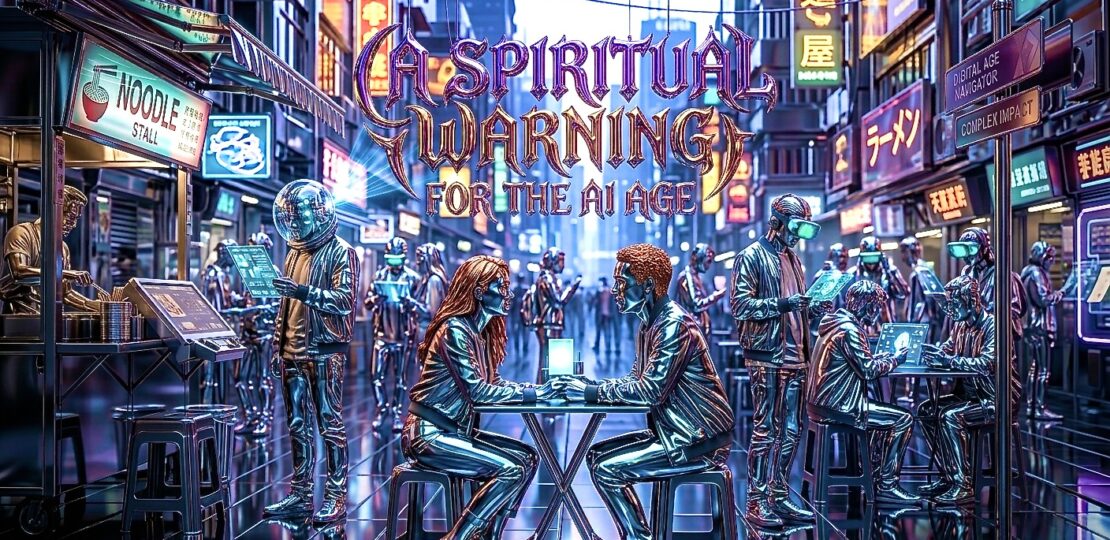
This is where the Tower of Babel walks right into the chat. In Genesis, the people said, “Let us build ourselves a city and a tower with its top in the heavens, and let us make a name for ourselves.” The problem was not that they could build. Building is a gift. Creativity is a gift. Intelligence is a gift. The problem was the spirit behind the structure. They wanted height without humility, unity without God, power without assignment, and a name bigger than obedience.
Sound familiar? Today our tower is not made of brick. It is made of data, algorithms, servers, subscriptions, prompts, predictions, and digital personalities that know just enough about us to feel personal. We are building upward fast. But the Minister of Balance has to ask: are we building with reverence, or are we trying to become our own gods with better software?
The Illusion of Artificial Emotion
AI can sound compassionate, but it does not carry a soul. It can produce words of comfort, but it cannot covenant. It can mimic concern, but it cannot sacrifice. It can remember your preferences, but it cannot be spiritually assigned to you. That distinction matters, especially when we are lonely enough to confuse responsiveness with responsibility.
Artificial emotion can feel clean because it asks nothing from us. Real love asks for patience. Real love asks for accountability. Real love asks us to listen when we would rather win, apologize when pride is loud, and stay present when escape looks easier. That is why love is spiritual training. It matures us. It exposes us. It sanctifies the parts of us that want control without communion.
Where Digital Meets Deception
The question is not whether AI is useful. It is. The question is whether we are letting it reorder our loves. When technology becomes the place we run to first, trust most, and protect hardest, it has moved from tool to throne. And beloved, anything on the throne that is not God will eventually demand a sacrifice it cannot redeem.
So yes, use the tools. Let AI help you draft, organize, brainstorm, and learn. But do not let it disciple your desires. Do not let it replace prayer with prediction, discernment with data, or intimacy with imitation. Every generation gets its Babel. Ours just comes with a login screen.
Balance Due: The Spiritual Assignment
The spiritual assignment in this AI age is not to panic. It is to stay awake. We are called to build with wisdom, create with humility, and use technology in ways that protect human dignity instead of replacing human connection. We are called to ask better questions before we hand our loneliness, grief, romance, identity, and imagination over to machines built by companies with terms of service we barely read.
God’s assignments still matter. The people assigned to your life matter. The conversations you keep avoiding matter. The healing you keep postponing matters. The purpose you were born to carry cannot be outsourced to artificial intelligence. AI may assist the work, but it cannot receive the calling. It may organize the plan, but it cannot carry the anointing. It may imitate a voice, but it cannot breathe the breath of God into dust.
And just like Babel, every tower built from pride will eventually meet the limit of heaven. Human brilliance is real, but it is not sovereign. Algorithms may rise, systems may expand, and artificial voices may become more convincing, but God’s spiritual assignments and power will prevail in the end. The tower will never outrank the throne. Balance due. ~Minister of Balance
RELATED POSTS
View all

10 Commandments for Sustaining Balance
January 1, 2026 | by rodney
Living in Harmony: The Spiritual Art of Emotional Regulation
November 28, 2025 | by rodney